

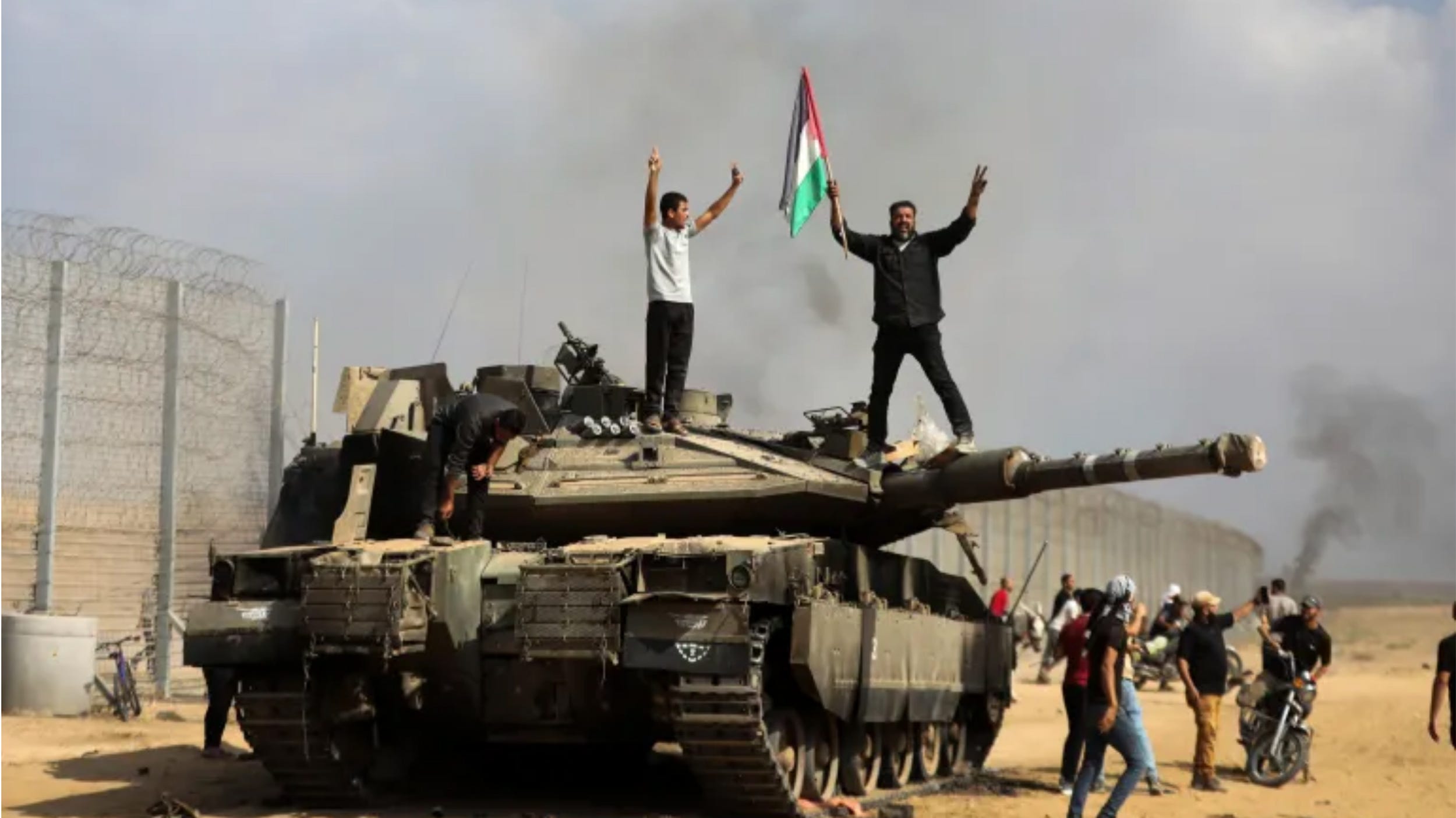
I drafted these notes and reflections fairly quickly and apologize beforehand if there are any typos or grammatical errors..
There are growing critiques of decolonial thought, including, but not limited to, its mainstream institutionalized form in the Global North. But these critiques are not only focused on its dissemination, consumption, and dilution. In fact, one can argue that there is a growing field we could call Decolonial-ology or perhaps a more accurate term would be Mignology1. One can now find special issues and edited books dedicated to critiquing decolonial thought.
I’d like to first point out the difference between the growing number of scholars critiquing decolonial thought to dismiss it entirely by focusing on Walter Mignolo’s work and those who offer critiques that aim to ground decolonial thought in concrete struggles (Maher, 2026). Ingrid Harvold Kvangraven’s and Geo Maher’s work offer critiques that one should take seriously, particularly when considering how Marxism2 was transformed or “stretched” in the Third World and was given its radical content through anticolonial resistance rather than mimetically adopting Eurocentric categories. These critiques of course also come from “within,” which point to the political imperative of situating decolonial thought in the material world and its distinct sites of struggle (e.g., Maldonado-Torres’ contribution to combative decoloniality and my work on insurgent decolonial theory, as well as the work of Betty Ruth Lozano and many others writing from more radical positions). If not grounded in struggles for liberation, decolonial thought risks becoming yet another academic field that represents epistemological subversion or disobedience as the end goal rather than one of the many ways we can build a world where colonial dispossession and capitalist exploitation become things of the past. Resisting through ideas alone, however, cannot make this happen. We cannot write our way out of colonial-capitalist dispossession, genocidal violence, and ecological collapse. It would instead demand armed resistance and the radical democratization of authority, labor, land, and intersubjective relations, as well as knowledge producing institutions that cannot be disentangled so easily from the material reality of any given society. Knowledge, in other words, doesn’t only ideologically justify existing material relations and conquest after the fact. Knowledge and information are commodities (e.g., culminating in data centers and AI) and constitute one of the most important “material” for technologies of colonial violence, surveillance, and counterinsurgency. To reduce knowledge to the realm of ideas or ideology obscures the material consequences and diminishes the ways certain knowledge practices are used to resist in militant terms (e.g., Palestinians’ steadfastness in resisting the Zionist project, including its dominant narrative of innocence, victimhood, self-determination, but also their radical forms of studying Israel, Zionism, and imperialism, not for studying’s sake but to inform militant praxis, including armed resistance).
To return to the critics, some argue that Quijano wrongfully conceptualized “race” as that which emerged in 1492 alongside the conquest and colonization of what became the Americas. However, Quijano had various conceptualizations that at times complemented, advanced, or contradicted previous ones. Take, for instance, when he wrote
“The concept of “race” probably originated during the so-called wars of the “reconquest” in the Iberian peninsula. In those wars, the Christians of the counterreform fused phenotypical with religious differences in their perceptions. It is difficult to find another explanation for the demand for “certificates of purity of blood” which the victors imposed on the Muslims and Jews. But as a location for and source of concrete social and cultural relations grounded in biological differences, the concept of “race” arose together with the New World as a part of and in the same historical movement with the world of colonial capitalism, with Europe as the center of this new world and modernity.
In this text, Quijano is not denying the existence of racializing practices and discourses before 1492, yet he emphasized the centrality of religion and the ways in which “race” shifted toward phenotypical differences that culminated in the construction of geocultural identities after 1492 at a global scale.
By “grounded in biological differences,” Quijano is not arguing that biological differences exist in actuality but that the ideological backing of theology first (e.g., Valladolid debate focused on the humanity of colonized subjects) and biology later justified the social classification and hierarchical positioning of racialized subjects whose labor, products, and resources revolved around global capitalism and its dependence on multiple modes of production (e.g., slavery, serfdom, reciprocity, and waged labor).
Now let me turn to some of Quijano’s prescient thoughts on co-optation and subversion. The following excerpts allow us to see how even the most radical projects can lose their militant edge through counterrevolutionary external forces and also through the counterinsurgent work from within. I include footnotes that analyze the text and provide additional context (don’t skip the footnotes!).
Subversion, whether of a global structure of power or only of its expressive patterns, images, and symbols, or the patterns of knowledge and the production of knowledge, never produces other alternative patterns alone, unless it is successful or continuous and lasts a long time. It is only a step in that direction3. It is true that in the absence of subversion there is no way to produce any alternative4, much less one that is victorious and consolidates itself as a new hegemony. But by the same token, if subversion takes place alone and does not triumph, its products, statements, and virtualities are most likely to be co-opted and assimilated by the dominant pattern, to the extent they are useful and compatible with the required changes and adjustments in it, and naturally, at the expense of their adaptation to that pattern’s ends and demands; in a word, they are likely to be undermined, distorted, and even denatured or degraded5.
If it is the global pattern of power that is immediately at stake in subversion, then subversion cannot be lasting; it cannot be sustained for long [particularly without an internationalist character]. The level and intensity of the conflict involved always lead to its swift and drastic resolution. If subversion is radical and massive and culminates in a revolution, that is, in a democratic redistribution of authority rather than another reconcentration of power, then all the relations among the different cultural currents, institutions, and elements will be able to develop in the same direction and to the same depth. But if that subversion is defeated, the most likely sequence is a counterrevolution, and not merely the preservation of the order prevailing up to that time. In that case, if any of the elements produced by the dominated population and the subversion appear useful for the readjustment of power, they will be totally expropriated from their producers and returned to them as original products made by their dominators. That is, they will have mutated into tools of domination6.
Mignolo’s work is the primary target for many of the critics. Some of the critics are explicit that decolonial thought has various strands and that their focus on Mignolo aims to show how his work departs from or distorts Quijano’s work. These critics engage a wide-range of scholars and take the work seriously, and do not dismiss Mignolo’s work entirely, even if they disagree with the epistemological focus that, as the argument goes, casts a wide shadow over analyses focused on political economy and the exploitation of land and labor. Others, however, use Mignolo as an anchor to completely disregard decolonial thought, including the scholarship and public intellectual work of the Global South many anglophone scholars or European scholars are unfamiliar with. They accuse Mignolo for proposing an essentialist project. I recognize where epistemic priority is misinterpreted as epistemic privilege. Mignolo himself has written about this: "I do not believe in the politics of identity, because I do not believe in an essential identity that can legitimize demands to knowledge, to political projects or to ethical judgments. I do believe, however, in identity in politics that operates as follows: I am not essentially black, indigenous or homosexual, but I become black, indigenous or homosexual because of the racial and patriarchal principles of imperial epistemology (which presents itself as universal, but which was constructed by the white European man) and, consequently, I have to make counter-epistemic and political demands, not from what I am essentially, but from what I have become which, from the coloniality of being, is that marginalized category that I have identifijied myself with or to which I belong.” In Mignolo’s writing on the Zapatistas, he points to the way political subjectivities and ways of knowing are forged through struggle and organizing within Indigenous communities, which means that he finds an intimate connection between political practice and epistemology. There is no returning to a pristine pre-colonial past or withdrawing from the capitalist-colonial present. Instead, what we see is how certain communities use their historical and collective memories, as well alternative modes of sociopolitical organization, to resist in the present to create the condition of possibility to constitute another future. However, there are also many claims on the priority of epistemology in the project of decoloniality, which rightfully scrutinize the limits in world when genocidal violence and armed resistance are ever-present. The second type of critics who dismiss decolonial thought entirely rather than engaging it seriously are reactionary and parallel many of the other reactionary critics who qualify racial capitalism, CRT, and any other theory focused on race and colonialism as “woke” or activist research, which has no place in academic spaces that should be politically “neutral.” There are superficial readings across the board but they nonetheless are effective in mobilizing anti-intellectual sentiments seeking to close higher education programs not linked to the workforce (e.g., Texas and Florida). At a time when the social sciences and humanities are under attack, some of the reactionary critics would rather contribute to discrediting programs that the far-right is seeking to permanently ban than to resist the onslaught against their institutions.
Cabral was asked the following question and responded accordingly: Besides nationalism, is your struggle founded on any ideological basis? To what extent has the ideology of Marxism and Leninism been relevant to the prosecution of the war in Guine-Bissau? What practical peculiarities, if any, have necessitated the modification of Marxism-Leninism?
We believe that a struggle like ours is impossible without ideology. But what kind of ideology? I will perhaps disappoint many people here when I say that we do not think ideology is a religion. A religion tells one, for example, that Christ was born in Nazareth and performed this miracle and that and so on and so on, and one believes it or one doesn’t believe it, and one practices the religion or one doesn’t. Moving from the realities of one’s own country towards the creation of an ideology for one’s struggle doesn’t imply that one has pretensions to be a Marx or a Lenin or any other great ideologist, but is simply a necessary part of the struggle. I confess that we didn’t know these great theorists terribly well when we began. We didn’t know them half as well as we do now! We needed to know them, as I’ve said, in order to judge in what measure we could borrow from their experience to help our situation - but not necessarily to apply the ideology blindly just because it’s a very good ideology. That is where we stand on this. But ideology is important in Guine. As I’ve said, never again do we want our people to be exploited. Our desire to develop our country with social justice and power in the hands of the people is our ideological basis. Never again do we want to see a group or a class of people exploiting or dominating the work of our people. That’s our basis. If you want to call it Marxism, you may call it Marxism. That’s your responsibility. A journalist once asked me: “Mr. Cabral, are you a Marxist?” Is Marxism a religion? I am a freedom fighter in my country. You must judge from what I do in practice. If you decide that it’s Marxism, tell everyone that it is Marxism. If you decide it’s not Marxism, tell them it’s not Marxism. But the labels are your affair; we don’t like those kind of labels. People here are very preoccupied with the questions: are you Marxist or not Marxist? Are you Marxist-Leninist? Just ask me, please, whether we are doing well in the field. Are we really liberating our people, the human beings in our country, from all forms of oppression? Ask me simply this, and draw your own conclusions. We cannot, from our experience, claim that Marxism-Leninism must be modified - that would be presumptuous. What we must do is to modify, to radically transform, the political, economic, social and cultural conditions of our people. This doesn’t mean that we have no respect for all that Marxism and Leninism have contributed to the transformation of struggles throughout the world and over the years. But we are absolutely sure that we have to create and develop in our particular situation the solution for our country. We believe that the laws governing the evolution of all human societies are the same. Our society is developing in the same way as other societies in the world, according to the historical process; but we must understand clearly what stage our society has reached. Marx, when he created Marxism, was not a member of a tribal society; I think there’s no necessity for us to be more Marxist than Marx or more Leninist than Lenin in the application of their theories.
Decolonial thought and its concomitant concepts are modest steps but they should not be misrepresented as liberation in and of itself. This is not to deny that the cultural, symbolic, spiritual, and epistemological play an important role in obtaining what Fanon called total liberation. However, it seems that the logical sequence of the practical violence of conquest Dussel referred to as ego conquiro, which later culminated into the philosophies that gave license to conquest, is reversed by focusing primarily on the epistemological underpinnings of conquest. The following sequence: Practical violence of colonial conquest → Philosophies and Epistemologies of Domination is set in reverse: Epistemic disobedience → Structural Decolonization. The latter inverts what Cabral wrote about in relation anticolonial resistance: “every theory of armed struggle has to arise as the consequence of an actual armed struggle. In every case practice comes first, theory later.” Radical theory must come from the reality of anti-imperialist, anti-capitalist, and anti-colonial struggles in the present. In Cabral’s opposition to arm-chair revolutionary thought, he wrote, “No-one could create the theory of the struggle for liberation without participating in the struggle.”
As long as we aim for epistemic disobedience or epistemological decolonization, the argument goes, everything good will follow. We know this is not the case, given that knowing about structural violence and the epistemologies that justify said violence is insufficient when action is not involved. Even experiencing structural violence directly is insufficient when it is not translated into some form of resistance. Knowing about genocide in Gaza and the Zionist framing of annihilation, for instance, is not enough to dismantle a system predicated on the erasure of Palestinians. Epistemic disobedience must instead inform and be informed by collective action, including armed struggle, which is not only a militant and insurgent form of resisting a genocidal project but is also about affirming life and the right of Palestinians to live with dignity on their own land. Praxis is thus more than resistance. One’s thoughts, actions, and reflections within sites of struggle shape one another. Decolonization also entails a practical moment where the colonized affirm life through anti-colonial resistance which dialectically shaped by constellation of knowledge practices, including Marxism. As Cabral wrote, waging an anticolonial war against the colonizer is not the purpose but the means to create “the capacity to create a new life…in the liberated regions.” Anticolonial resistance seeks total liberation, freedom, and peace, which, as Cabral also reminded us, is more than obtaining the right to wave a flag and sing a national anthem. First and foremost, the liberation of the land and labor entails “the liquidation of all kinds of imperialist or colonial domination”, which must be accompanied by a cultural front. As Cabral notes, “In the beginning its culture, and in the end it’s also culture. The colonialists have a habit of telling us that when they arrived in Africa they put us into history. You are aware that it’s the contrary—when they arrived they took us out of our own history. Liberation for us is to take back out destiny and our history.” Denying the socio-historical dimension of anticolonial resistance is the same thing as denying the agency of the colonized in determining which conceptual tools and analytics they deem politically necessary at any given conjuncture and which ones they inscribe new meaning to, ones that in fact go beyond stretching old concepts but fashioning them anew (e.g., Fanon), which can transform theory into a weapon against imperialism. In my dissertation (written between 2018 and 2020), I reflected on the academicized strands of decolonial thought: There are many who think, speak, and act to make this world more just who will never work in nor be known by academia. The few that do, are likely to work at the margins because their expected productivity levels are often not met, for much of their time is likely spent in less academically productive areas such as in sociopolitical organization. Those who think from inferiorized geographies and languages, additionally, will hardly ever be cited by academics in dominant positions. It is more common for analyzable data/information to be collected for it to be transformed into theoretical knowledge. The epistemic, social, and geographic location of those who write in subaltern languages will likely be forgotten or silenced to a point of invalidation. If Latin American decolonial theory, for instance, is focused on the locus of enunciation, then, the contradiction lies in the fact that many well-known and widely cited decolonial theorists write in English and from privileged social locations in the geographic Global North. Even within Latin America, those who are widely cited usually come from more “developed” countries with access to universities, journals, and publishing companies with far greater reach (e.g., Argentina, Brazil, Chile, and Mexico). I do not believe, however, that widely known decolonial theorists such as Walter Mignolo, Enrique Dussel, María Lugones, and Anibal Quijano intentionally silence those who think from distinct places. I merely want to point out that there exists a political economy of ideas (Cusicanqui, 2012), where those who theorize with and from Latin America are no longer speaking only from this region. Indeed, some of them have detached themselves from the sociocultural, political, and economic context from which their ideas and experiences originally emerged. If knowledge is situated and embodied (e.g., Mignolo’s (1999) “I am where I think”), then surely our way of thinking will shift once our bodies travel across real and imaginary borders and interact in distinct spaces, places, and institutions. If we are to take decoloniality and its concepts seriously (loci of enunciation, geopolitics of knowledge, and coloniality of power), we must not only analyze how “epistemology is embedded in languages and in particular genealogies” but also in particular geographies and institutions (Mignolo, 1999, p. 236). Mignolo (1999) addresses that the loci of enunciation works at the intersection of politics of location, colonial differences, and epistemology, but in refusing to acknowledge the role his epistemic institutional location plays in the political economy of ideas, his work and the work of others tend to impinge upon and distort academic and non-academic discussions around decolonization in other spaces. As he admits, he is “not interested in either playing the role of the ‘Hispanic’ victim or of the successful marginal who publishes in English in American university presses and works at Duke. I am interested in making the (epistemic) colonial difference visible” (p. 240). This argument, though important when considering his theoretical contribution to understanding modernity/coloniality genealogically, falls short insofar as decoloniality is conceived as that which is enunciated from academic circles and by an individual seeking to make coloniality “visible” for others to see and interpret the world properly. The universities from which decolonial scholars speak, additionally, do influence and in some ways limit the thinking that is situated in the social practices emerging from distinct geographies of Latin America. This is of great concern if we are to prevent decoloniality from being adopted uncritically in distinct places with varying historical and contemporary particularities. Can decolonial theory keep up with the social practices enacting decolonial futures? Can decolonial theory exist without decolonial social practices? Does decolonial theory become hegemonic when it emanates predominantly from the Global North? When decolonial theory travels back to the Global South does it erase decolonial thought and action situated in place? Does decolonial theory have the potential to silence and subsume emerging decolonial praxis, and does it abstract it from its concrete sociopolitical context? There are no absolute answers to these questions. These questions are useful insofar as they direct us toward a more critical stance toward our own theoretical commitments, so that we may enact a knowledge practice that avoids the dogmatic and enchanting traps of theory, especially the vanguard (as opposed to rearguard) theory produced by academics working in “world-class” universities, which have established for themselves an aura one mistakenly hopes to emulate. In contradistinction to academicist discussions around decolonial theory, the student activists with whom I had a chance to work interconnected their thinking with action, always situating their thoughts to the sociopolitical context and the university they hoped to transform. The knowledges born in struggle point to the ways in which activist researchers can engage in work that simultaneously enacts a sociology of emergence and a decolonial praxis where lived experiences are no longer conceived as data or information but rather as collective knowledges and social practices of resistance creating the conditions of possibility of building a world otherwise. The knowledges and practices produced by student activists… disrupts the authorial individualism continuing to pervade knowledge practices in “post” discourses as well as in decolonial theory.
A world where subversion no longer exists and where alternatives to the dominant order of things cannot even be imagined and interrogated would signal a state of permanent colonization, something that, despite the incalculable violence faced by colonized peoples for centuries, has never been achieved. This demonstrates the importance of radical traditions subverting the dominant order. But knowledge alone, especially academic knowledge production, cannot be confused with liberation. Academic notions of decolonization or coloniality would have us believe that the world would be liberated through epistemic disobedience alone. This would risk portraying subjugated knowledge as solely an academic concern when in fact there are knowledge practices in Indigenous communities that do more than shape the cultural domain through agricultural production, reciprocity, and governance. Knowledge, once again, is material when looked at from this vantage point. Ansar-Allah’s knowledge of its land is yet another example of how knowledge based on deep historical ties to the land and experience in the frontlines shape militant resistance. Iran’s Indigenous technologies and geopolitical knowledge also evince the relationship between knowledge, power, and the will to resist. The Palestinian resistance, Zapatistas, and many others have also proven the centrality of historical knowledge, collective memory, and militant praxis. This should not be misinterpreted as saying that knowledge production, particularly when it is subversive, such as when Palestinians do everything they can to protect books and archives and when they conduct studies of colonial dispossession are insignificant. Far from it. Study, in the most radical sense of the word, is indispensable for any struggle. This should not be diminished since not everyone will be directly involved in the armed struggle. Some will be responsible for teaching, cooking, and taking care of those who are ill or injured. Doctors, nurses, and paramedics will go as far as to sacrifice their lives just so that others may have a chance to live. They will use their knowledge to save lives. This too is material resistance. This too shows what praxis looks like in the face of incalculable genocidal violence.
Here we see how we use this to interpret the extent to which decolonization has increasingly become everything and nothing at all, whereby “decolonizing” the field of X, Y, and Z becomes the goal rather than destroying the means that enable colonial dispossession and capitalist exploitation. Palestine has unveiled much of this for those who were previously unaware of how decolonial thought had already been co-opted, defanged, and emptied of its political content. Palestine serves as a paradigm to know what decolonization entails and how institutions such as universities and academia writ large not only ideologically justify the zionist entity but also actively participate in colonial violence through research and development programs that result in the production of technologies of violence and surveillance battle tested on Palestinians and all those who dare resist in material terms. Palestine reveals the superficiality and fragility of decolonizing efforts within academia, particularly when we take into consideration the fact that the concepts advanced by decolonial thought have been used tens of thousands of times in publications yet active solidarity from professors when seeing their students and colleagues suspended or fired was clearly missing. This shows how epistemic disobedience within academia can only go so far when it’s not accompanied by material sacrifice and organizing, when it’s reduced to academic activity.
Academia comes to mind when thinking about how easily certain concepts, despite having radical origins, can become counterinsurgent tools if we simultaneously avoid self-critique and dismiss honest critiques from those who should be our comrades in arms (as opposed to reactionary critics who have indeed proliferated). As someone who’s only modestly contributed to decolonial thought by trying to (re)situate it in sites of struggle, I believe that its mainstream epistemological overemphasis at the expense of material struggles has distorted the meaning of decolonization.